
A Doctor’s Work is Never Done (Even After Retirement)
The Anatomy of a Hiccup: A Retired Physician’s Midnight Call

Though I have been retired from the practice of medicine for some time, it is not unusual for me to receive calls for advice. I welcome them. It is reassuring to know I can guide someone through the healthcare system, which can be difficult at times.
Common questions I am asked are: “Who is a good doctor for XYZ? Could you please get me an appointment? Should I get another opinion? I can’t reach my doctor — can you help? ”
Many apologize, “I am afraid I am bothering you.”
My reply, “If you think you are bothering me, that’s your problem. I value your confidence in me.”
Last week I received a call from the wife of a dear friend who had unrelenting hiccups. He was unable to speak. By the time she called, he had been hiccupping for two hours. I remembered a lecture I had given about hiccupping some years ago.
Hiccups, known medically as singultus, are involuntary and usually temporary spasms of the diaphragm. The distinctive hic sound is caused by rapid tightening of the vocal cords that follows the sudden diaphragmatic contraction. Hiccups typically start for no apparent reason and disappear after a few minutes.
However, there are cases where hiccups can get out of control, lasting for days, weeks or even months. In some, the hiccups may occur up to sixty times per minute and may limit breathing.
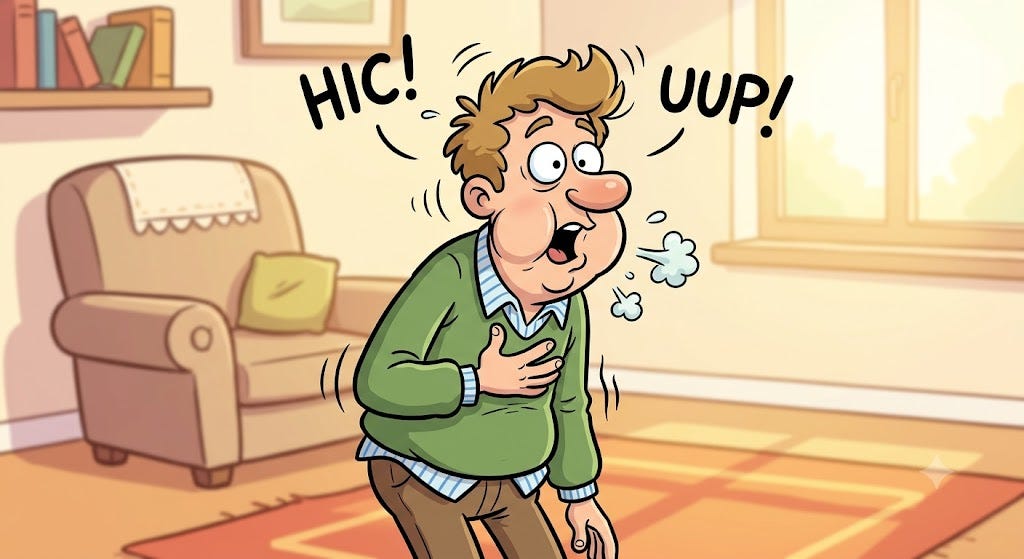
We’ve all had the ‘hics’. While they can be amusing when they afflict others, they can be embarrassing, painful and sometimes dangerous. There are many causes suggested for hiccups lasting more than forty-eight hours, but none have been verified. A hair in the ear, a neck tumor, gastroesophageal reflux, sore throat, some neurological disorders, excess alcohol, and some medications are among the many.
Because my lecture on the subject was four decades in the past, I had to dig deep into my memory bank of home remedies before making the call to send him to the emergency room.
I told his wife to try stretching his neck with his head tilted back, place a hot water bottle on his upper abdomen and suck on mints which facilitate belching. A good belch sometimes works.
The tried and tested breath holding may relax the diaphragm to stop the spasms.
Later, I turned to the internet to see what other remedies I might have forgotten. The list of crowd-sourced cures was extensive: dissolving sugar in the mouth, sticking the tongue out, pressing the thumb of one hand firmly into the palm of the other, singing fast, laughing out loud, sticking fingers into the ears, pressing the nose gently while rapidly sipping water, gulping ice water, or breathing into a paper bag.
Oh well.
Unfortunately, my friend’s hiccups persisted despite our best efforts, so I advised his wife to call the emergency squad to transport him to the hospital. He stayed overnight, and after a series of diagnostic tests and a fair amount of medication, the hiccuping finally stopped.
When I spoke with him the next morning, he was heading off for a well-deserved nap.
As was, I trust, his wife.
© 2026
ED, you are true professional helping people in need with medical needs long after retirement.
Ed, it's been a long time that I have heard a hiccup but have in the past given a loud shout to change the rhythm. Now all I need is a horse and wagon traveling town to town.
About once a yr, I see a patient for advice on hiccups. These patients expect that I, a gastroenterologist, will crack the code with the wave of a hand. I confess that my track record on identifying the cause or prescribing a cure is rather lackluster. Fortunately, as in your case, spontaneous remission is the usual outcome.