
Under the Streetlight Clock
A savory stew on my street; Wealth Avenue

Life holds a knapsack full of memories—all significant, and many, if not most, worth recording. Growing up in a neighborhood of family and friends was a journey to cherish. That neighborhood and the people living, working, and playing there, though from diverse ethnic backgrounds, shared strong traditions of family, caring, and mutual respect.
I am grateful for the simplicity of that time. Though I know I can never return, my mind frequently does.
Memories of growing up gave me the incentive to write, and there is no end. Essays of my past assure its permanence for me…of necessity perhaps…to honor not only those whom I have loved but also the time in which we lived.
I define myself with stories that relive the fun of my early years in a small, easily managed world. It was like a club; one I could enter and leave as I wished. When I entered that club, I was comfortable. When I left, I wanted to re-enter
Save for the memories, there is little left of the neighborhood and the weave of families that helped to shape my life. These essays are a sentimental glance back to a time that made me what I was to become. What I write of stores, streets, schools, houses, sidewalks, streetcars, telephone poles, gardens, neighbors, and friends was in a small world spanning a few city blocks.
The neighborhood was a savory stew of people: immigrants, their children, and their children’s children. There was not a face or a voice I did not recognize. Most were Italian or Irish. While my grandmother was singing Vicin ‘u Mare, my mother was singing Fascination, I was singing Earth Angel, and someone else was singing Danny Boy. We not only melted into America, but we also melted into each other.
Wealth Avenue
You might think nothing ever happened on this small street; much did. We could sneak a ride on the back of “Joe the Ragman’s” wagon. The Grocery Man might be making deliveries from his huge truck ---- a traveling store, followed closely by the fruit peddler. On Fridays, the Fish Man appeared, blasting his mouth horn with the message that his truck was filled with the first catch.
The Sullivan Trucking Company was garaged at the end of the street, and the ten-wheelers rumbled by. The ice man carried his heavy wares on his back to the tenements above. The fire chief came home for lunch. The waffle man served white, sugared waffles from his truck. Another man sold clothing from his car.
The Humpty Dumpty Ice Cream Man came at 7 o’clock every evening in the summer; the refrain of his ringing bell was heard streets away; the “creamsicles” were delicious!
The neighborhood tenor could be heard rehearsing the national anthem he would later sing at Madison Square Garden, and the sounds of piano students echoed through the air. Kids were always playing games: hopscotch, “alara,” stickball, “peggy,” touch football, hide-and-seek, and capture the flag.
Domenic washed and polished his car every Saturday. A future Rhode Island governor grew up right there. The Russo boys never walked calmly out of their house; they bounded. My third-grade teacher lived down the street, and sometimes I followed her to school.
There were great places to hide.
I remember cowering behind the window curtains one night while helmeted air-raid wardens patrolled our darkened street. A place to hide, I guess.
Wealth Avenue, part of a trilogy with Health and Wisdom Avenues, was a wealth of experience, community and love. It was a straight city street flanked by comfortably spaced bungalows, cottages and two- or three-deckers whose doors spilled directly onto the sidewalks. There was an occasional garage, and one empty lot. There was only one front lawn; all the others were in the back.
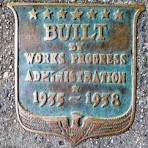
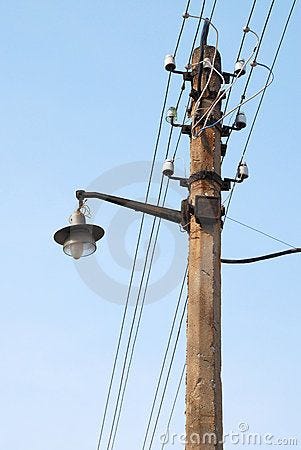
Sturdy curbs defined the concrete squares, embedded at regular intervals with small commemorative plates to acknowledge the Works Progress Administration (WPA) workers who so proudly built them during the Great Depression. The sidewalks were lined with tall utility poles shaped like the letter “t”, linked by swayed telephone lines. Here and there, a netless basketball hoop was nailed to a pole, which might also serve as home base for a game of hide-and-seek.
Streetlights were suspended from the middle of the poles, with circular, scalloped metal “hats” covering the bulbs. When the lights were lit, a yellow haze emanated, casting dancing shadows on the street below. They were our summer-evening clocks.
“Come home when the streetlights go on,” my parents would say.
“Can I stay out if I stand right under the streetlight with my friends so you can see me?” was my inevitable question in response.
Wealth Avenue ran perpendicular to the main thoroughfare, Academy Avenue. A barbershop and a bakery bracketed its beginning, and its end was marked by a row of four rental garages. Our house was the third from the end, and the best vegetable garden on the street—my grandfather’s—was right next to it.
Cars and houses were never locked. There were no broken windows. Nothing dreadful ever happened, but something was always happening.
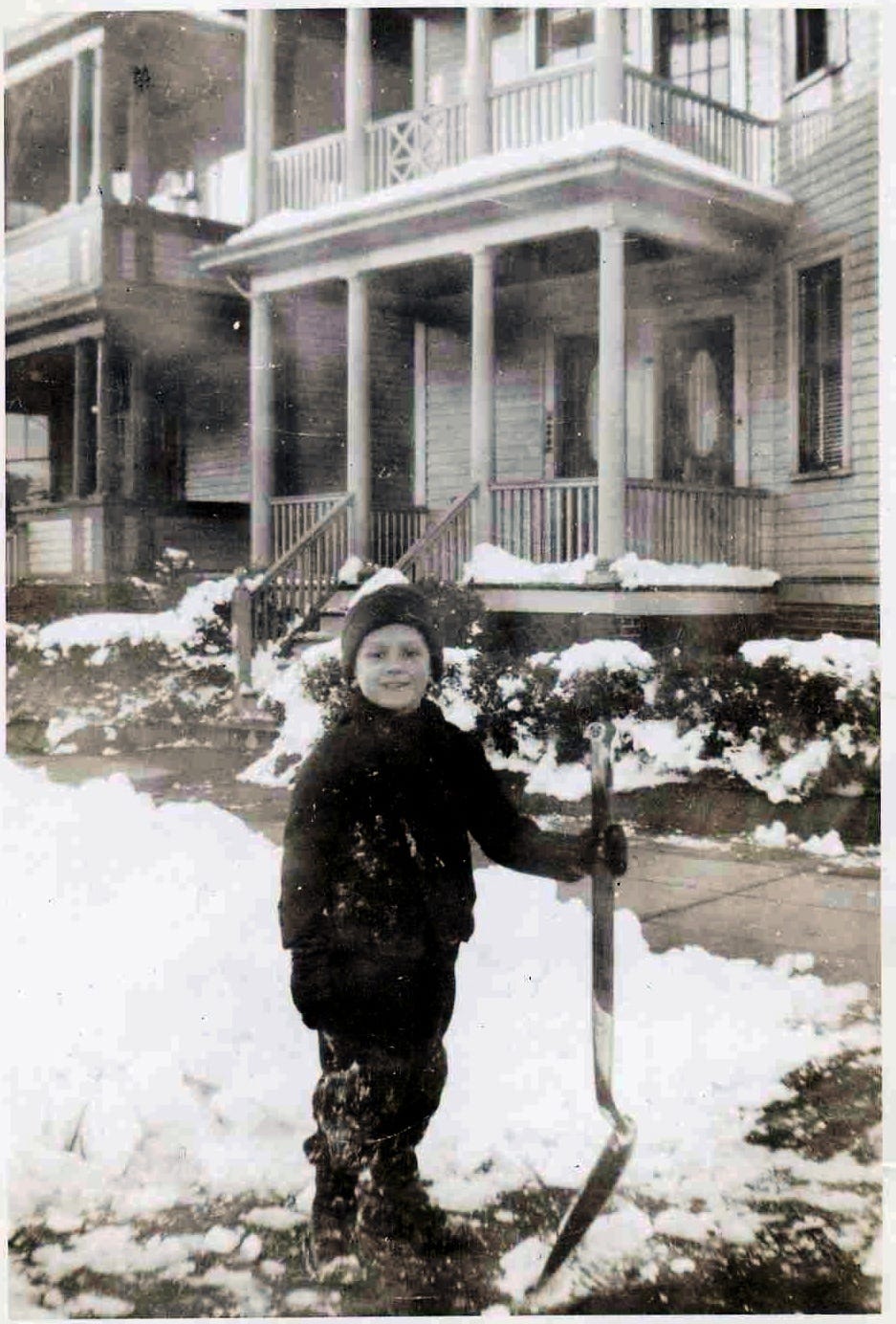
On snowy winter days, residents took to the sidewalks to shovel. Piles of snow left along the curb were an open invitation for climbing, tunneling, and trying to walk atop their entire length. Inevitably, the snow would tumble back down into the path as we played, which annoyed some of the neighbors.
Not my grandfather. He was our shoveler, and he had a methodical way of recleaning the sidewalk, which he did without complaint whenever we unseated the snow.
I loved Wealth Avenue! I wanted the street to stay the same forever. It could not, and on a recent visit there, it did appear different. It seemed, not unlike people, to have become smaller and shorter with age. But time hasn’t altered my memories.
I embrace my past on Wealth Avenue with deep affection.
© 2026