
Bread Makes a Life
Look someone in the eye and say, "Ain't bread great."

I held the warm loaf close to my chest.
As Diane and I strolled through the piazza in Todi, Italy, on a brisk October morning, I smelled the aroma of bread wafting from the bakery. I entered and was comforted. A bakery can do that. I spotted them: two large oval loaves; you know, the crusty Tuscan ones with the subtle aroma and sweet clouds of magnetism that snare you.
Traditional Tuscan bread, pane Toscano. is distinctive. It contains no salt - a tradition dating back to the Middle Ages, likely originating from either a salt tax dispute or a blockade that made salt scarce in the region.
“Prego,” said the baker.
“Due.” I pointed.
As we strolled into the square, the bread was huggable. We held the loaves closely. The warmth entered our bodies. “This feels so good.”
Now warmed by its company, it was time to rip un pezzo da mangiare. I ripped off a piece. Who could resist? The bread had a dense, chewy texture with a thick, crunchy crust. We were in bread heaven, experiencing the truth of Italy.
We took it further, one day stopping at the best local ‘deli’ for a freshly baked ciabatta infused with olive oil and layered with prosciutto, tomato, basil, and salt. Or maybe just a simple mortadella and bread combo with no extras.
When I was a kid, Italian bread was the staple of every Sunday dinner. It went with the salad, but some used it per fare una scarpetta; to scoop up the pasta sauce with the heel. Bread with pasta? C’mon. Well, OK.
Or make a small meatball sandwich.
Recently, when I was dipping the heel of my Italian bread in the gravy, I recalled the days when I stood by my grandmother’s side as she was making “her” gravy for the Sunday pasta. (Gravy makers are possessive). On tiptoes and shifting my weight, I looked up at her, then at the gravy when she said, “Itsa OK now to dunka you bread.” And that I did, with anticipation and haste.
I swiped my corner through the gravy, watched the steam swirl, blew on it, and finally bit in. Warm and tasty, it softened even more before I swallowed. I would later enjoy that same wholesome taste over pasta at our Sunday dinner. In later years, I remember dipping a corner of Italian bread into hot coffee. I loved bread.
My other memory was of coming home from school, entering Grandma’s tenement, pausing to smell her cooking, and asking, “Grandma, can we have some bread and oil?”
She cut a slice of Italian bread, poured olive oil, then a pinch of salt, a morsel of pepper, not much, and off we went, munching, oil spilling down our chins. I can taste it now. In fact, I’m going for some.
It wasn’t just Italian bread in my life. I also grew up on white bread, as in Tip Top and Wonder Bread, the one that “helped build strong bodies in eight ways.” That’s what Mom gave me for lunch: baloney jammed between two slices and loaded with French’s mustard. She was in a hurry, heading to work.
Bread and butter were a great after-school snack. And morning toast with butter and jam often supplanted the snap, crackle, and pop of those Rice Crispies guys. No wonder the phrase “It’s the greatest thing since sliced bread.” It’s the way to show enthusiasm and appreciation for something or someone.
Grilled cheese held an important childhood memory.
Bakers now make several varieties of shapes and tastes. In the grocery store alone, I can find Italian, French, Irish (love soda bread), sourdough, rye, wheat, cinnamon raisin, gluten-free (necessary, eh?), and multigrain loaves. Wonder Bread is still around.
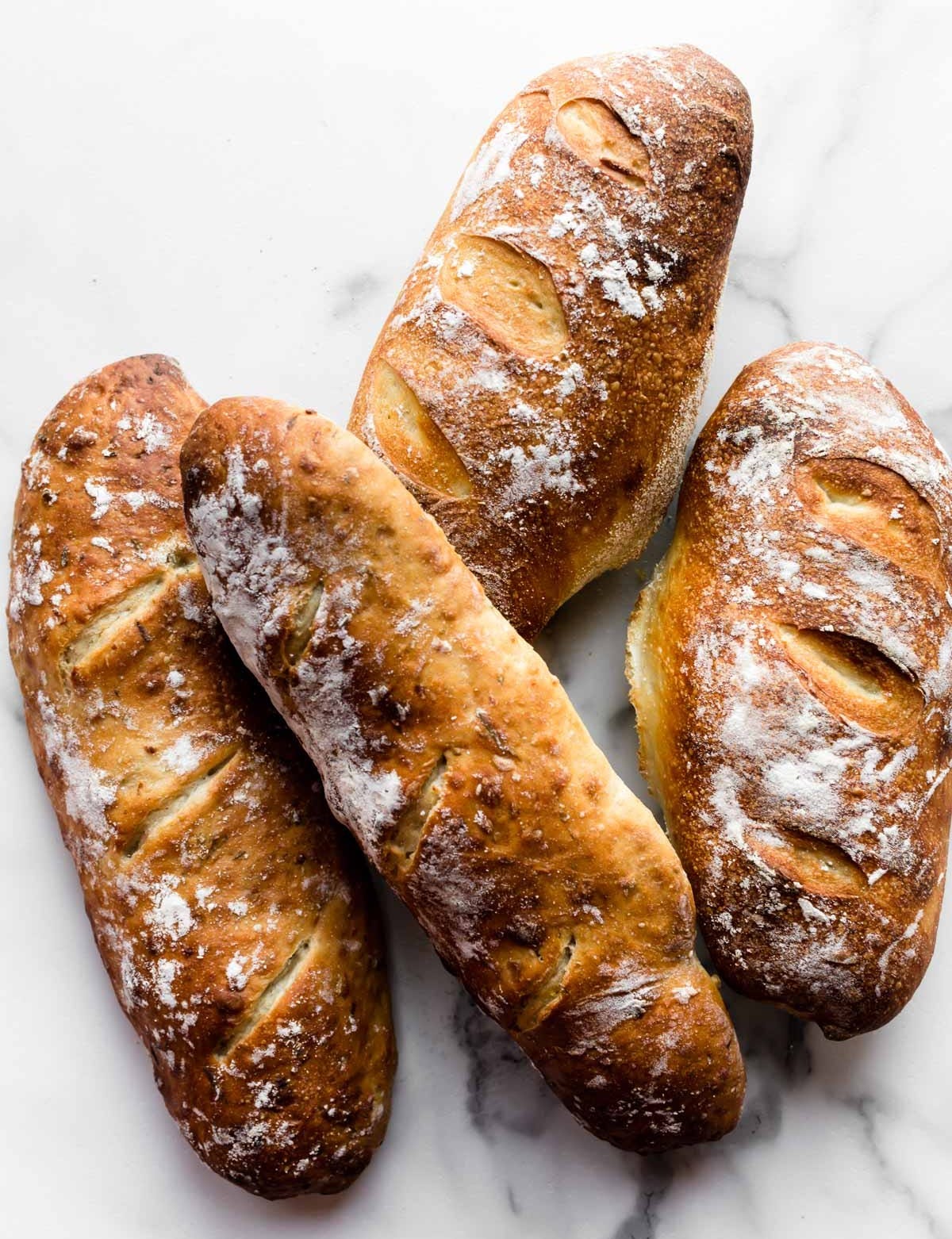
But it is the simple Italian loaf that summons me. Nothing is as alluring as the bread in the lovely, southern town of Altamura, Italy.
There, the loaves, weighing about half a kilo, have the usual crisp dark crust. Aromas of hazelnut, coffee, and vanilla arise from its warmth. Doughy when chewed, a slice of toasted bread seasoned with sea salt, Apulian oil, and a hint of rubbed garlic is a step away from bread heaven.
In 37 B.C., the Roman lyric poet, Horace, called Altamura bread the best in the world.
Horace says . . . “hard work, simple food, and plain but unstinting living are best."
No matter the era, bread is that satisfying something that should be an integral part of every day. It is mine.
I asked my Italian professor what bread she remembered from her youth in Naples, Italy.
“Sfilatino,” she was quick to respond. “It is a long, narrow bread with a crunchy crust, chewy inside, perfect for stuffing with prosciutto, cheeses, or other fillings to make a nice panino.”
Ah, bread. Bread seems like that common thing that everybody can agree on. It lights up memories. It gives meaning to the day.
Whether or not your company is good, if a basket of bread comes out, put down your devices, pick up a piece, make eye contact, and say, “Ain’t bread just the best?”
© 2026
Remember the day you invited Joe Luca and me to play golf at Metacomet? Before we played you ordered a basket of toasted italian bnread. Doc, I've been eating toasted italian bread every since. 3 slices drippping with butter each morning. Toasted italian bread and butter and happy momories of fun day with cousins..... can't be beat!!
Such a hot warming story. My dad worked at Harvest Bakery for years as a machinist. It was down the street from where we lived. I remember running there after school and sitting on the tables waiting for the bread to come out.....hot and fresh...yummy. It was the best.