

It’s not heroic. It’s just what you do, and it’s easy; thus, the twelve gallons.
It’s been years of giving blood. To date, I have donated over 100 pints, approaching thirteen gallons. It’s just something I do; something necessary.
As a medical student, I learned the value of stored blood, the value of having a reserve, not only for emergencies but for “routine” conditions: anemia from a blood disorder, hemophilia, blood loss during surgery, childbirth, etc.
I started working in the Albany Medical Center blood bank when I was a medical student. In 1964, all a donor needed to do was mosey in off the street, sign, and if the blood count was normal, Bingo, I drew a pint into a large glass vacuum-sealed jar, which we stored in a giant refrigerator.
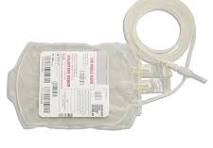
Some years later, Dr. Carl Walter, a surgeon (His son was in my medical school class), invented a plastic bag to hold blood and make storage much easier. He made the bags on The Fenway in Boston, which is how they got the name Fenwal. Those bags are still in use today, and whenever I give blood, I always tell the phlebotomist my stories.
To give blood is a rewarding experience.
After arrival at The Rhode Island Blood Center, I fill out an extensive history. Quite different from the days when I drew blood, when no history was taken. The only criteria were a normal blood count and a vein. Many donors came in off the street in the late evening. They needed the $25.
Fortunately, it’s much different today. A form with a lengthy list of questions must be answered.
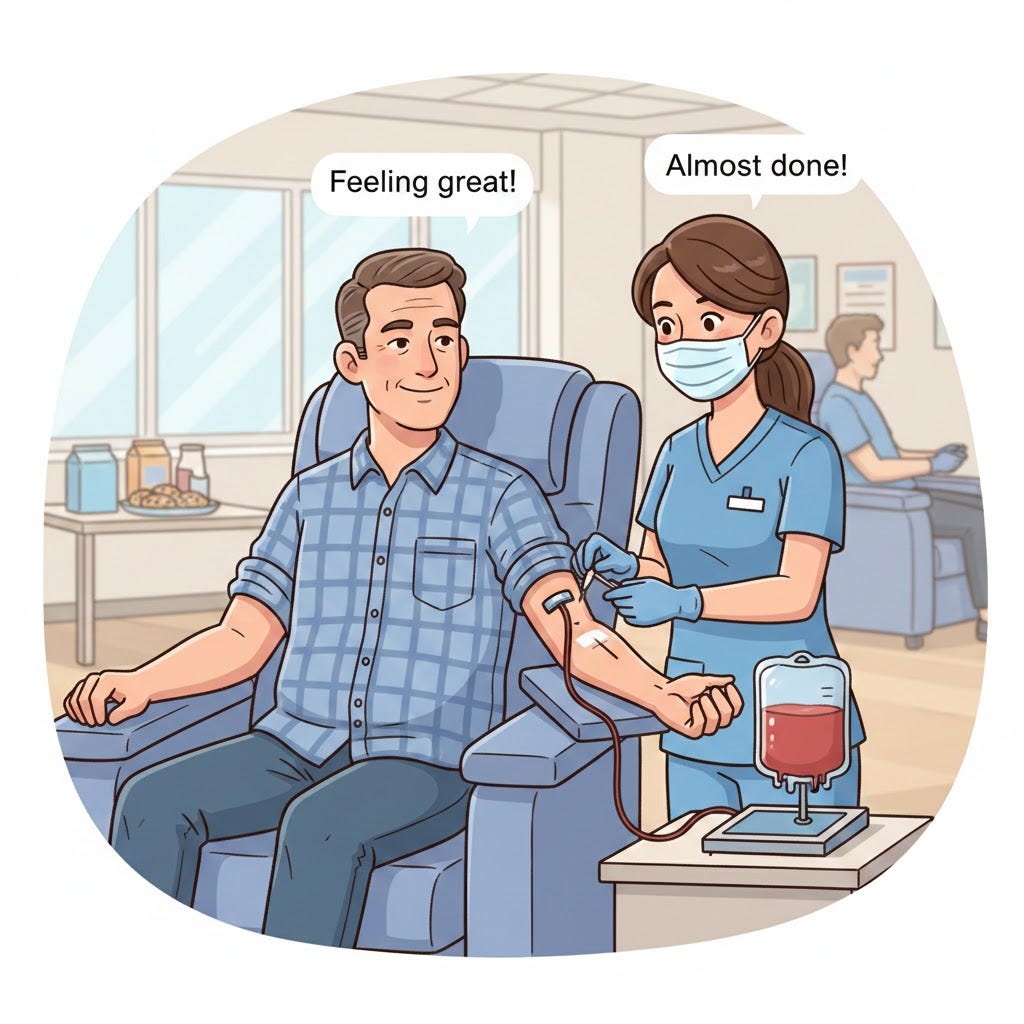
The friendly phlebotomist does a physical assessment, checks the hemoglobin, and then moves me to the table where I watch television while my blood is collected, labeled, and sent to a center for processing. The blood pours from the needle resting in a vein in the crook of my arm through the tubing into a Fenwal plastic bag (vide supra).
A few small tubes of blood are also collected and sent to a testing laboratory, where a dozen tests are performed to establish the blood type and test for infectious diseases.
It takes little more than an hour from start to finish, longer if you sit to drink complimentary juice and munch on Oreos or Fig Newtons. “Can I take some of these Fig Newtons home?”
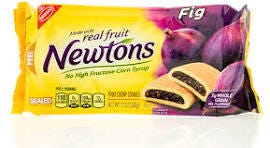
“You bet. Go ahead. It’s your reward.”
One day, I was sitting next to a lady who had also just given blood. She was enjoying her snacks of cranberry juice and Oreo cookies. Her husband strolled in. “Ready to go?”
“Yes.” At that point, he loaded his capacious coat pockets with packages of Oreo, Fig Newtons, and even found room for a juice in each pocket. I asked him if he had given blood earlier.
“Nah. Jes takin’ stuff. They want you to have it.”
“Really, even if you have not donated?”
“Oh. Yeah.” His wife rolled her eyes. I rolled back and smiled.
Hmmm . . .another senior citizen on the take. No matter. It was good that he drove his wife to donate. The snack heist didn’t matter.
Take time to give blood. The rewards are far greater than Oreos and juice.
It’s a good feeling to know that your donation may have saved a life. It’s satisfying. It’s personal. It can build confidence.
There is even a badge of honor that lasts a few days: the little subdermal, purple blood stain where the needle was inserted. It’s easy. It helps.
If you really need attention, keep the red bandage at the blood site in place for an extra day and show it around. It’s a promotion.
Donate. You will feel good.
Go to the RI Blood Centers site and read their mission statement.
***The American Red Cross makes a plea for donations as it teeters on a blood shortage
© 2026
Thank you all Blood Donors. You are unsung heroes because of the invisible benefits given to others. Your donation of blood, plasma, or platelets has undoubtedly helped countless people in many ways. It may have helped save a life in a crisis situation, given one increased strength after a surgical procedure, or allowed a patient with cancer to continue treatments. The comfort brought to individuals, families, and society through blood donations, cannot be measured. Blood Gives Life. Blood Gives Strength. Blood Gives Hope.
God Bless!
Ed, as a regular blood donor, I'm right there with you. I discovered many years ago that giving blood just made me feel a little better about the world at a very human level. There's something so basic and simple.
I am Rh-negative, and my husband is Rh-positive. We have two daughters. We would have been at risk for Rh incompatibilities but for the RhoGAM shot, first released just over 50 years ago. I'm truly humbled.
I also have O-negative blood. Not rare, but that makes me a universal donor, so I keep giving. I've even looped my husband into this for more than the cookies. In fact, he's discovered an ever-so-slight benefit for folks with high blood pressure: give a little (ya know, release that pressure). So, we go together. Every 8 weeks. I tipped past 104 units this last time.